In short: Generally, you are no longer required to identify users connecting to free WiFi in Italy as you were in the past. Best practices include a separate guest network, a strong password, and an updated router. Always consult a professional regarding your specific situation.
The Current Regulatory Framework at a Glance
Since 2019, the decree simplifying access to public WiFi networks in Italy has removed the requirement for user identification for free, open WiFi offered by commercial establishments—a significant simplification compared to previous regulations.
What 'Identification' Means and Why It Is No Longer Required
In the past, some establishments felt it necessary to collect ID or personal data to activate WiFi access. This obligation, linked to anti-terrorism laws that have since been updated, no longer applies to free WiFi networks open to the general public.
Network Segmentation Remains Recommended
While not a specific legal obligation, technically separating the WiFi network dedicated to customers from the one used for internal management systems (POS, databases, business data) is a highly recommended cybersecurity practice, regardless of your industry.
Be Mindful of Content Transmitted via Your Network
Although there are no identification obligations, it is still best practice to include acceptable use terms for your guest WiFi network, especially for businesses with high foot traffic, to protect yourself from potential misuse of the connection.
Da 49€/sede/mese · prova gratis 14 giorni
- Attivo in 30 secondi
- Nessun vincolo
- Si affianca al tuo gestionale attuale
Practical Advice for Secure Implementation
If you have specific doubts regarding your situation (for example, if your business is subject to specific industry regulations), it is always advisable to consult a legal advisor or your accountant, as the law may contain specific exceptions for certain types of businesses.
Liability for Third-Party Misuse of the Network
Even without an identification requirement, the business owner is generally expected to adopt reasonable cybersecurity measures (updating the router, using a strong password): a prudent approach that reduces the risk of being involved in the event of illicit use of the connection by a customer.
Differences Between Free and Paid WiFi for Regulatory Purposes
The simplified framework described applies to free WiFi offered as an ancillary service. WiFi offered for a fee as a standalone service may fall under different regulatory classifications, a point to verify with a consultant if you are considering this less common model.
Frequently Asked Questions About Free Guest WiFi
Do I need to ask customers for their IDs?
For free WiFi offered as an ancillary service, generally no. If your business has specific industry regulations, check with a consultant.
Do I need to separate the customer network from the POS network?
It is not a specific legal obligation, but it is a security practice that is always recommended: create a separate guest network.
Are terms of use required?
They are recommended, especially if you have many visitors: just a few clear lines regarding proper network usage.
How can I also use it for marketing?
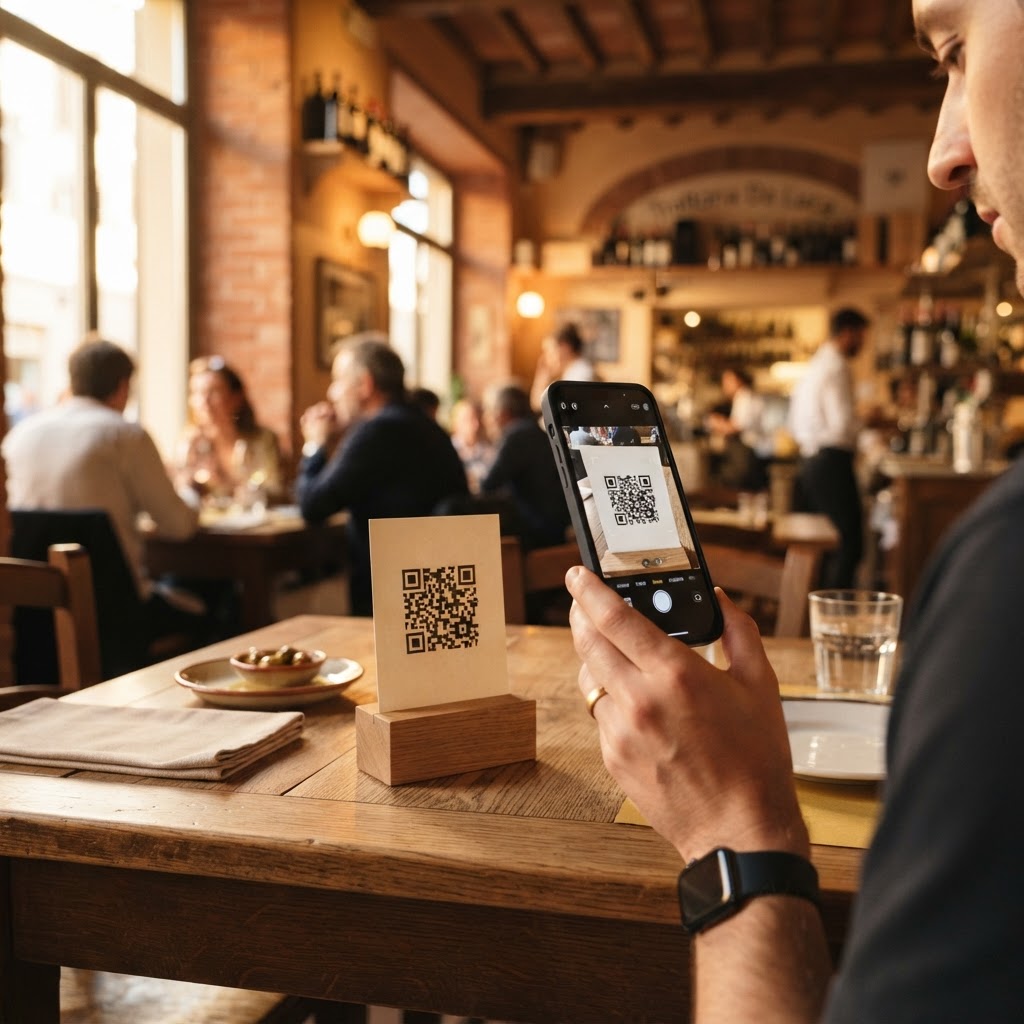
Use a QR code that opens a page featuring your WiFi, social media, reviews, and menu. Read our guide on WiFi QR codes and discover how it works for restaurants and bars, with a 14-day free trial.
This information is provided for educational purposes and does not constitute legal advice.