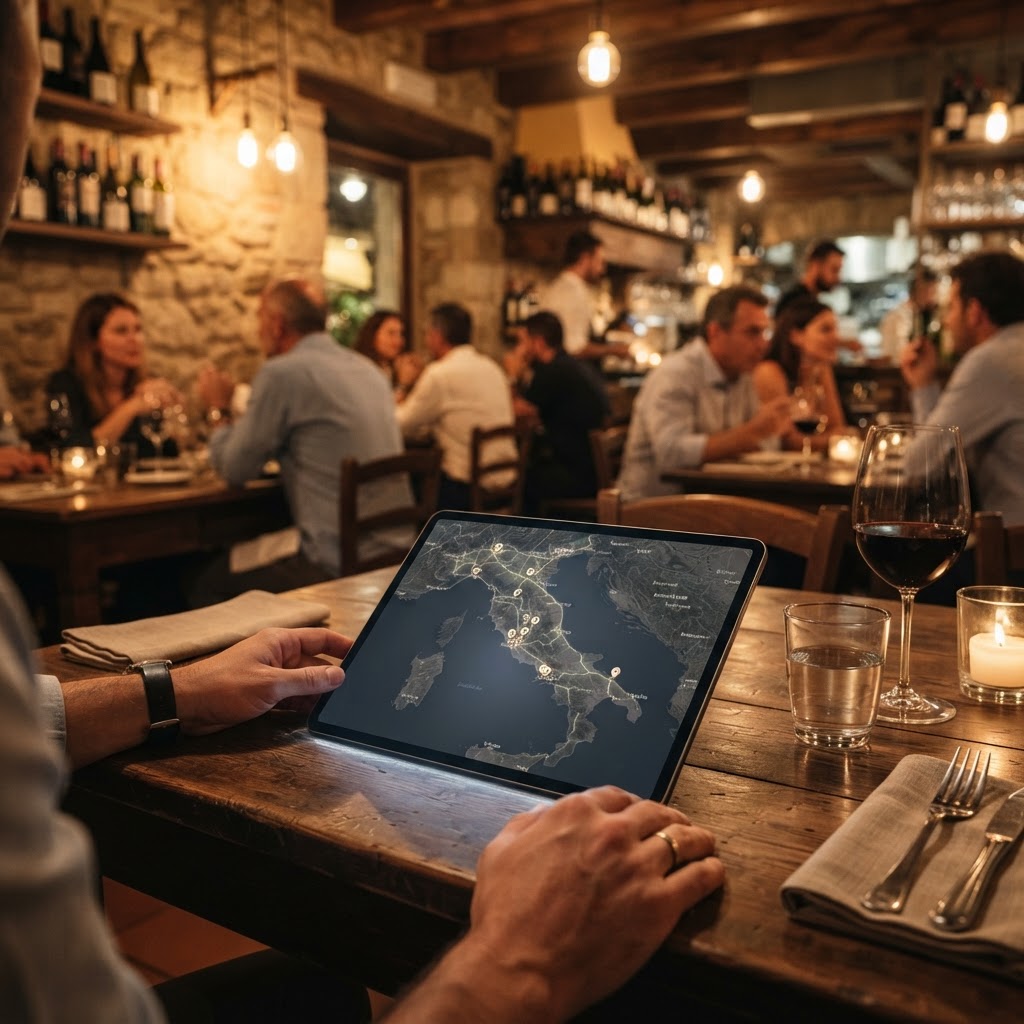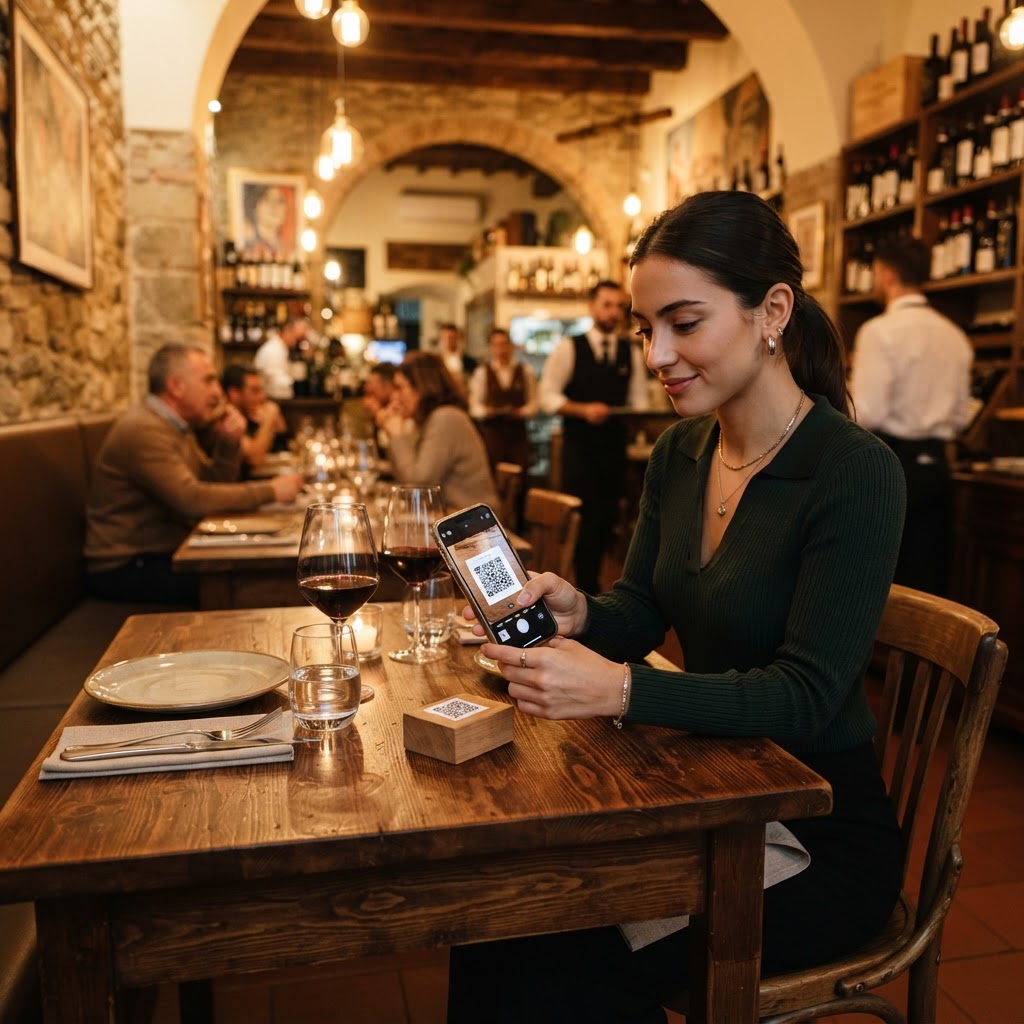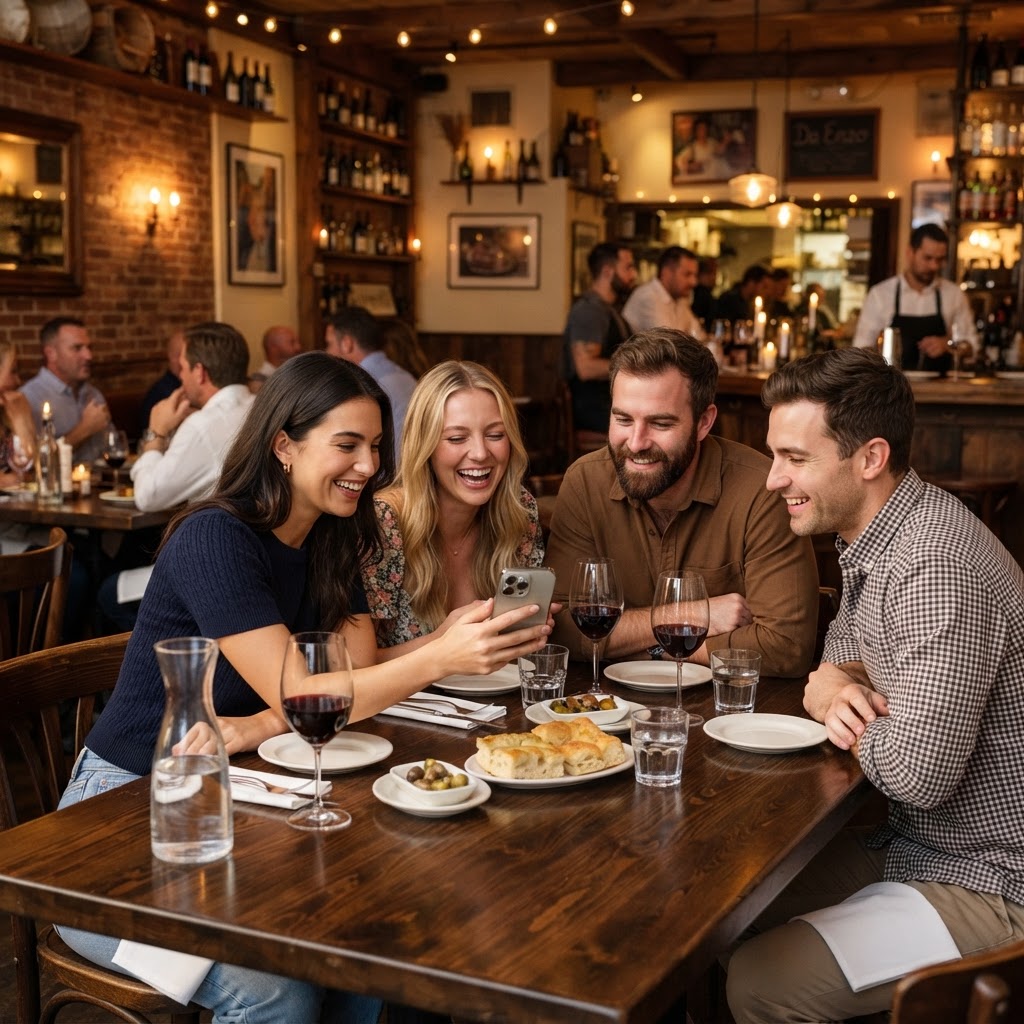
In short: The customer scans a QR code, chooses their items, and sends the order, which goes straight to the kitchen or POS. The waiter remains a key player in service and hospitality; only the order-taking process changes.
How it works in practice
The customer scans a QR code at the table, the digital menu opens, they select their dishes and send the order: the order arrives instantly in the kitchen or at the POS without needing a waiter to take it down manually. The waiter remains central to the service, delivery of dishes, and guest assistance — only the 'writing' of the order changes.
When it really makes sense to activate it
It works particularly well in high-turnover venues (quick lunches, happy hours, beach bars, festivals) where wait times for ordering impact the experience, and in venues with limited staff during peak hours. It makes less sense in high-end restaurants where table service is part of the perceived experience — in such cases, it can coexist as an option rather than a replacement.
The real impact on average spend
A digital menu with photos and visual suggestions tends to increase sales of appetizers, desserts, and extra drinks compared to verbal ordering, simply because the customer sees the option instead of having to remember it or ask for it. It is the same e-commerce principle applied to the dining room.
Order errors are drastically reduced
An order entered by the customer eliminates transcription errors by the waiter (wrong dish, forgotten allergen, unrecorded modification) — one of the most frequent causes of complaints and waste in the kitchen.
Da 49€/sede/mese · prova gratis 14 giorni
- Attivo in 30 secondi
- Nessun vincolo
- Si affianca al tuo gestionale attuale
It is not an all-or-nothing approach
The most balanced solution, especially where human interaction in the dining room remains a core value, is to leave the choice to the customer: those who want speed can order from their phone, while those who prefer personal contact can call the waiter. The QR code is an extra option, not an obligation.
How older customers actually react
The most common fear — that older customers might refuse to order via QR — almost always diminishes in practice: most venues that adopt it still make traditional ordering available, and over time, even initially skeptical customers tend to try it once they see others doing it naturally at the next table.
The effect on staff, not just customers
Less time spent manually taking orders means more time for the waiter to provide recommendations, check in on guest satisfaction, or manage situations that truly require human attention — the QR code does not reduce the value of the service, it shifts the focus toward what a customer cannot get from a digital menu.
Frequently Asked Questions
When does it make sense?
With high turnover or limited staff; not for every venue.
What changes for the staff?
Less time taking orders, more time at the tables.
How do customers pay?
Even from their phone, if you enable it. Read more about table payments.
How can I try it?
With a 14-day free trial. Discover the page for restaurants and bars.
3 steps to get started today
- Test it on 3 tables.
- Get feedback from your staff.
- Expand gradually.
Read also
- Digital menu with QR code: guide for restaurants and bars
- How much does a digital restaurant ordering system cost
- Managing seasonal ice cream shops with multiple locations